Introduction
You found a Miami surgeon whose before-and-after gallery matches what you want. The price works, the consult video felt reassuring, and you are ready to book the flight. Then a quiet thought cuts through the excitement: how do you make sure the reality matches the marketing when you live three states away?
Out-of-state surgery leaves you vulnerable because you are building a critical medical relationship at a distance, without your local support system or a facility you have walked through yourself.
The gap between a polished Instagram reel and a safe surgical experience is real, and your health can’t sit on the wrong side of it. You don’t need to scrap the idea of traveling for good care. You need a verification process that treats marketing claims as claims, not facts.
This guide covers three things you have to get right: checking your surgeon’s credentials, independently auditing the surgical facility, and nailing down recovery logistics and follow-up care before you pay a deposit.
Key Takeaways
Before you transfer a single dollar, lock down the following five verifications. A Miami plastic surgery practice that checks every box dramatically reduces your risk profile as a traveling patient.
- Board Certification: Confirm the surgeon holds active certification from the American Board of Plastic Surgery (ABPS) or the American Board of Facial Plastic and Reconstructive Surgery (ABFPRS). A generic state medical license is not enough.
- AAAASF Facility Accreditation: Verify the surgical suite holds current accreditation from the American Association for Accreditation of Ambulatory Surgery Facilities (AAAASF) for the class of procedure you are having performed.
- 24/7 Recovery Support: Secure a written commitment to direct-line access to a medical professional around the clock during your post-operative stay.
- Itemized All-In Cost: Demand an itemized quote that separates the surgeon’s fee, anesthesia, operating room time, implant costs, and all post-op garments or therapies to preempt financial shock.
- Continuity of Care Protocol: Obtain a written transfer-of-care plan that names a timeline for suture removal in Miami and establishes a clear process for integrating your local provider at home.
At a Glance
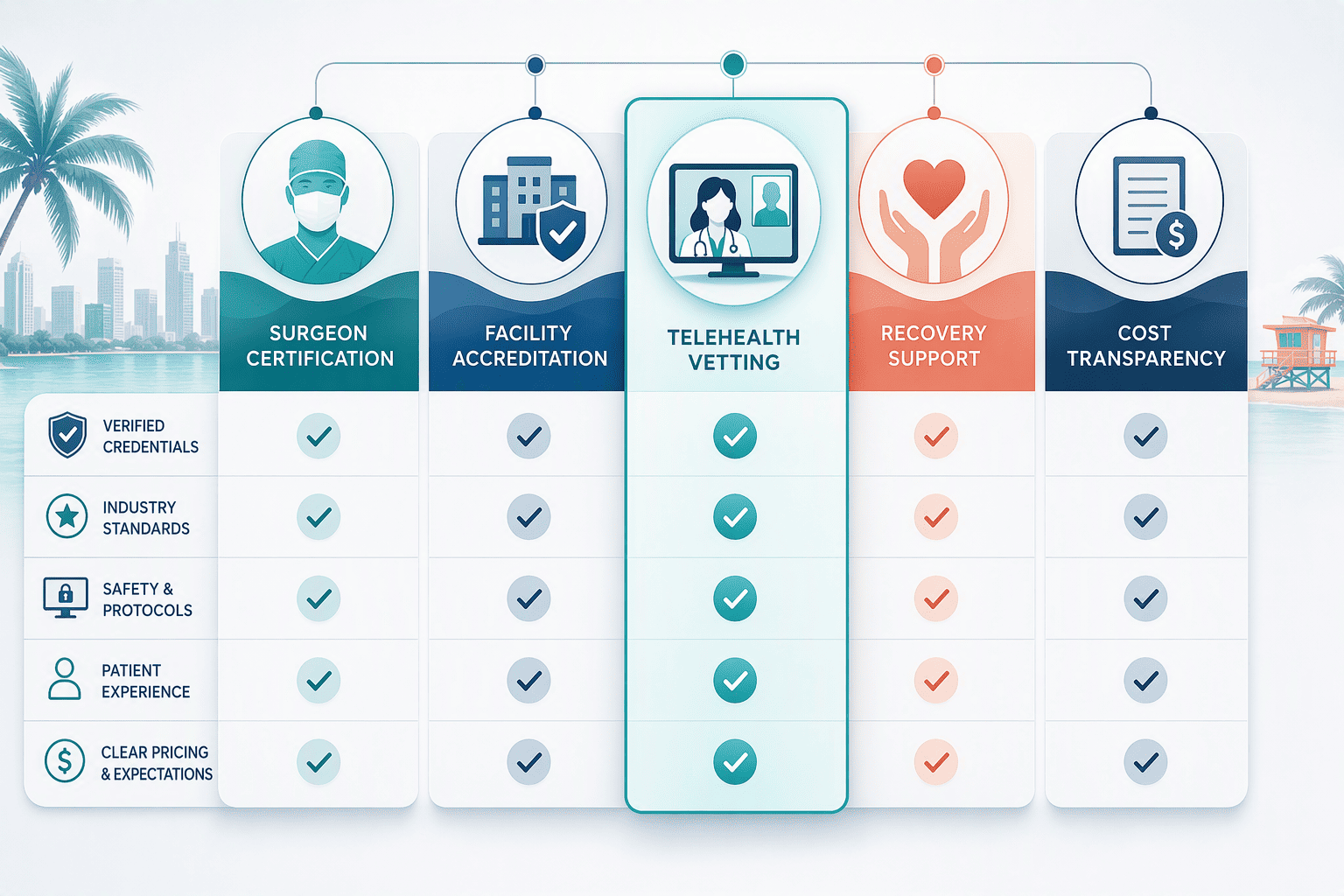
Here is how the options compare across the dimensions that matter most.
| What to Verify | Why It Matters | How to Confirm Before Traveling | Common Pitfall to Avoid |
|---|---|---|---|
| Surgeon’s board certification | Ensures specialist-level training beyond a medical license | Look up name on ABPS or ABFPRS online portals directly | Accepting a generic “board certified” claim without verifying the specific board |
| Facility accreditation | Confirms onsite safety, equipment, and emergency protocols | Ask for AAAASF accreditation certificate by name; verify online | Assuming a clinic looks clean is enough; many lack hospital-level backup |
| 24/7 recovery support | Prevents isolation if complications or questions arise after hours | Get a written policy from the practice, including who answers and how | Settling for “call our office,” which closes at 5 PM |
| Follow-up care plan | Avoids being stranded without suture removal or complication management | Request a written timeline for Miami aftercare and a transfer-of-care letter for your local doctor | Thinking you can manage everything remotely without a local provider lined up |
| All-in itemized cost | Prevents surprise bills for anesthesia, facility time, or garments | Demand a line-by-line quote that lists every fee before deposit | Relying on a single package price that adds hidden charges after booking |
The Credential Filter: Confirming Your Surgeon’s Board Certification Beyond the Wall
The phrase “board certified” on a website means nothing until you confirm which board issued the certificate. Many traveling patients get burned by assuming any generic claim is equivalent to the gold standard. The only designations you should accept for aesthetic surgery are certification by the ABPS for body or thorough plastic surgery and the ABFPRS for facial procedures.
To cut through the noise, go directly to the source. The ABFPRS requires a surgeon to submit peer-reviewed operative reports of a minimum 100 facial plastic surgeries to even qualify, which is a level of scrutiny a state medical license does not demand. Open the ABPS and ABFPRS online verification portals and type in the surgeon’s name.
A negative result immediately disqualifies them. However, even a valid certification is not a guarantee of volume; board certification is a benchmark of excellence, but a surgeon may not frequently perform every procedure in which they trained. Ask a brutally direct question during your virtual consult: “How many times have you performed this specific operation in the last twelve months?”
The Facility Safety Audit: How to Independently Verify AAAASF Surgical Accreditation
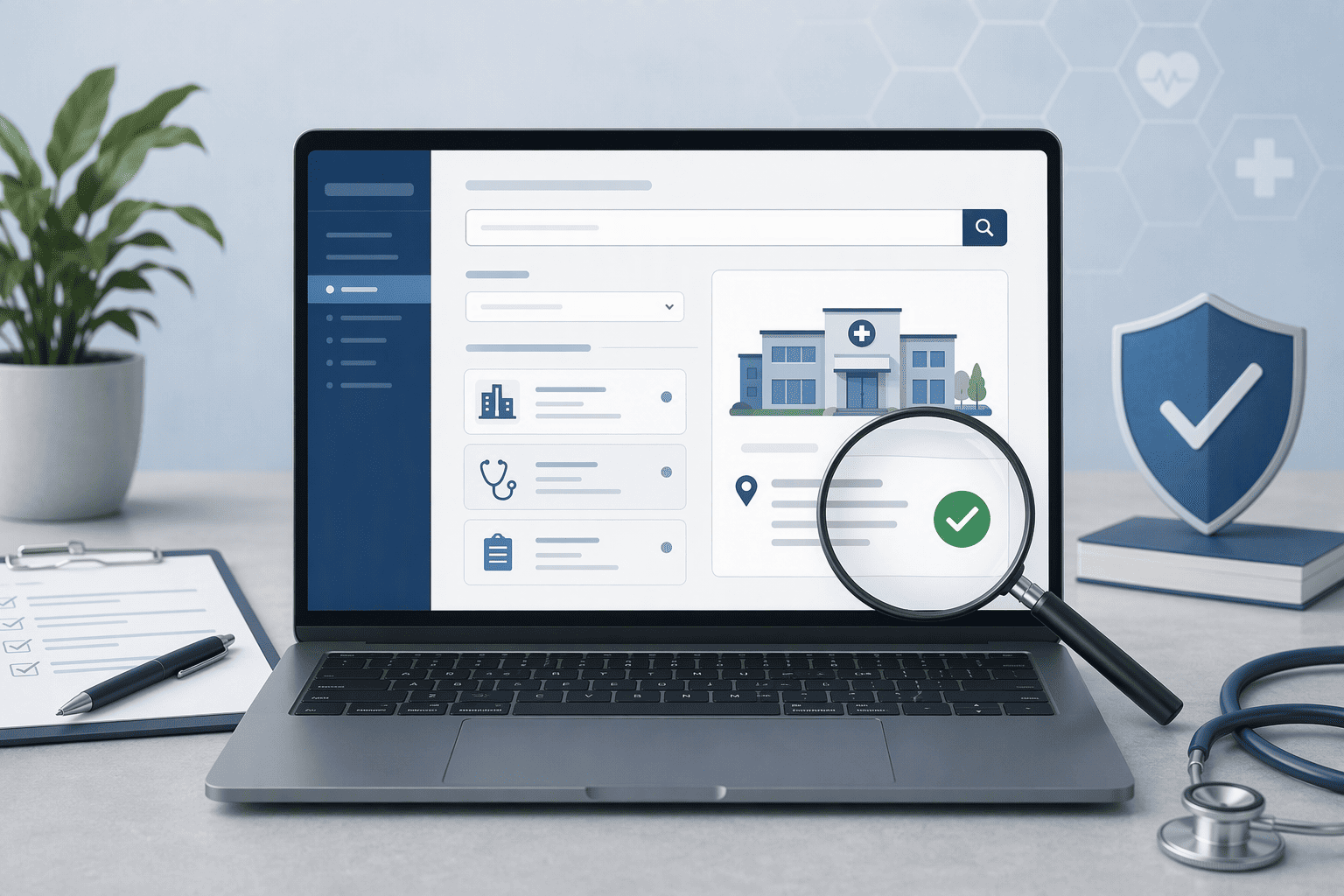
An outstanding surgeon practicing in a substandard outpatient facility is a recipe for disaster you cannot afford. Hospital-level safety protocols do not automatically exist in a private clinic unless an independent body has verified them. You need evidence that your operating room passes a voluntary inspection that a standard business license does not require.
To protect yourself, visit the AAAASF website and use the “Find a Facility” tool to look up the specific clinic address on South Dixie Highway or Brickell Avenue. The accreditation status must be active and current; a lapsed certificate is a massive red flag. You also must understand the class rating. A Class A rating allows procedures under local anesthesia, but a Class B or C accreditation is required if your operation involves deep sedation or general anesthesia, which most thorough body contouring and facial surgeries demand. Outpatient surgery safety hinges on this distinction, and confirming it removes the risk of being operated on in a room that was never vetted for the depth of anesthesia you will receive.
The Virtual Vetting Process: Maximizing Telehealth to Validate Experience and Technology
A video call is your primary tool to sniff out a generic surgical mill from a practice that operates with precision. Most virtual consultations for plastic surgery slide into a sales pitch; you can flip that by running the meeting on your terms. Ask for something real that proves clinical competence, not a slick slide deck.
When you’re on the screen with the coordinator or surgeon, tell them to turn the camera around and give you a live walkthrough of the accredited operating room and recovery suite. Direct them to show you the anesthesia machine, the backup power systems, and the sterile processing area right then. How they handle that request tells you everything about how open they actually are.
After the tour, get specific about your case. Skip “Do you do liposuction?”
and ask for the exact tumescent technique and the brand of cannulas they use for Lipo 360 at the Miami clinic. Some practices, like The Method Plastic Surgery, walk through their specialized clinic setup for procedures such as liposculpture during a detailed consultation; press them to show you the device itself so you can check a “state-of-the-art technology” claim with your own eyes.
Shift the focus from equipment to results by asking for hard numbers. When they describe a fat transfer method like pairing Lipo 360 with a BBL, ask which graft preparation system they use, such as SmartGraft, to improve fat transfer results, and then ask what percentage of fat cell viability they expect based on their own audit of past cases. A surgeon who gives you a tight, candid estimate is working from a real track record, not a script. Vague, aspirational answers are a reason to walk away.
The Recovery Logistics Matrix: Concierge Care, 24/7 Support, and Strategic Housing

The greatest danger for an out-of-state patient isn’t the surgery. It’s the first 72 hours afterward, alone in a hotel room with no one who knows your chart.
Your recovery plan needs to be infrastructure you’ve already paid for and confirmed, not a list of numbers you might call. Get a hard commitment for direct-dial, 24/7 access to a medical professional who has your operative report. A practice that sends you to a general answering service, or a third-party nursing line with no real-time view of your file, hasn’t met the bar.
Distance between your bed and the clinic matters sharply in Miami. A seroma or a hematoma that needs attention at 11 p.m. can’t wait on a rideshare crawling through traffic. The setup you want is a recovery house or hotel suite inside a ten-minute radius, with in-person follow-ups already on the calendar.
Confirm the lodging lets you stay put for the minimum required time. Major body contouring means staying in the area one to two weeks, at least until a qualified provider clears you for suture removal. Before you book a flight, ask for the specific staffing protocol.
Reputable groups keep skilled medical staff close and give you a direct line after surgery, but you need that defined in writing. A verbal promise of round-the-clock support doesn’t hold up at 2:00 a.m. when you spike a fever. Insist on a document that states a physician or registered nurse stays on-site or on immediate call to your recovery location, and that you won’t be routed through a telehealth portal during an emergency.
UHealth’s plastic surgery team puts it plainly: comfort and trust drive a healthy, fast recovery. That standard rests entirely on physical access during the window when things are most likely to go wrong.
The Cost Transparency Mandate: Deconstructing Hidden Fees and Financing for Out-of-State Patients
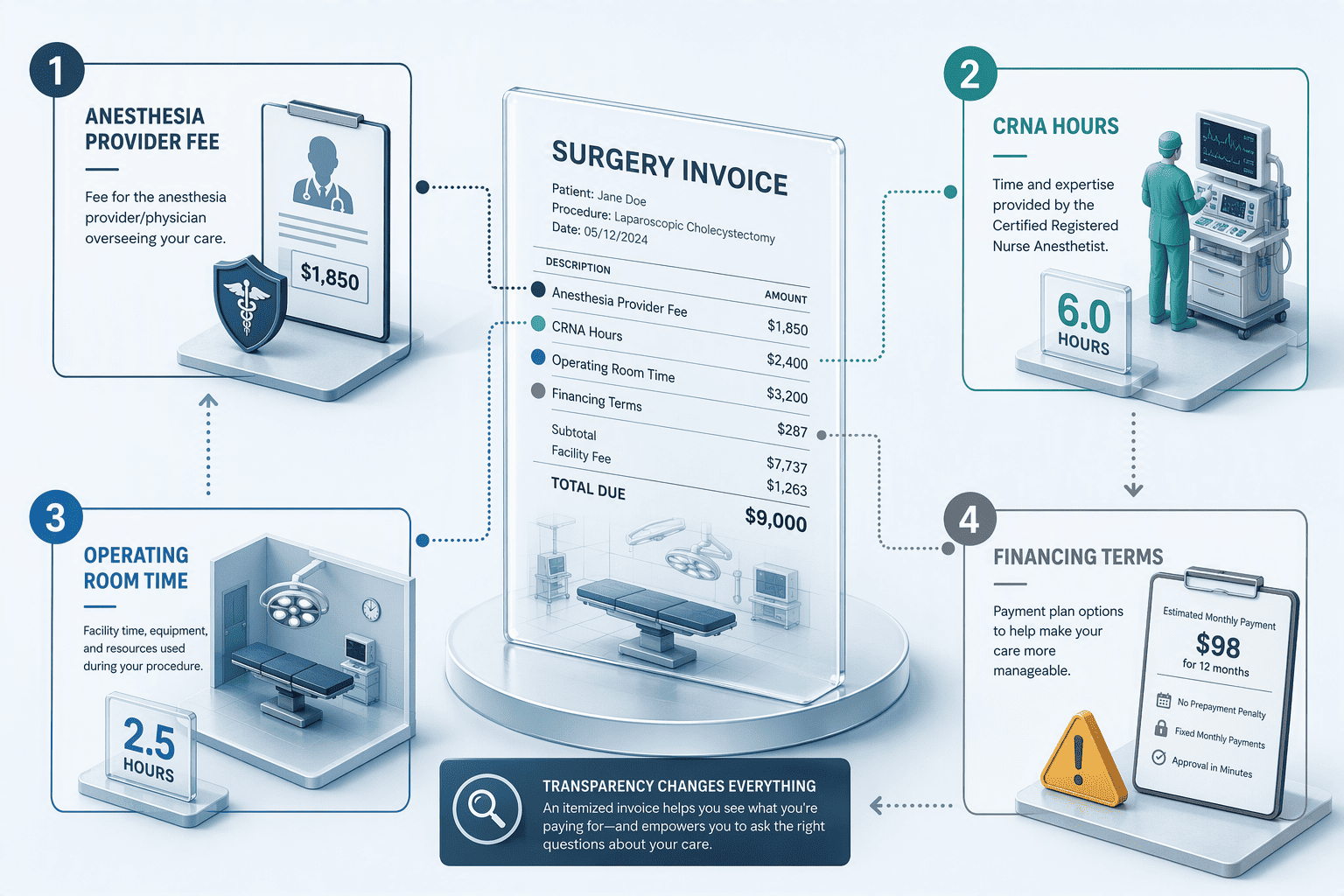
You need to view the quote through a lens of line-item skepticism, pulling every ancillary expense out of the shadows before your trip.
- Mandate a detailed invoice: Demand separate line items for the anesthesia provider fee, certified registered nurse anesthetist’s hours, operating room time cost for a Class C-accredited facility, and the expense of board-certified anesthesiologists if applicable.
- Look beyond lump-sum quotes: Male enhancement procedures generally run from about $1,000 to $25,000 in Miami, depending on complexity and grafting, which makes a lump-sum quote far too ambiguous. The same applies to breast lift surgery and high-definition liposuction.
- Account for non-surgical costs: Compression garments, lymphatic drainage massage packages, and prescription scar therapy gels are things you will inevitably need during recovery, but they might not show up on your surgery day invoice.
The Continuity of Care Protocol: Structured Follow-Up and Local Provider Integration
A clean surgical handoff is the only mechanism that prevents you from becoming a medical orphan when you land back at your home airport. While your Miami surgeon handles the primary procedure, your local provider must be the designated partner for late-onset infections, seromas, and final aesthetic assessment. Secure this handoff agreement in writing before scheduling surgery.
- Lock the suture removal window: Confirm a specific timeline for when the surgeon will remove stitches in Miami during your required stay. For many facial and body procedures, this happens in roughly one to two weeks, and you cannot leave until this step is completed.
- Secure the operative report transfer: Obtain a signed release that authorizes your medical chart, including detailed operative notes and implant serial numbers, to be sent directly to your local primary care physician or dermatologist.
- Pre-vet your home provider: Call your local doctor and explicitly ask if they are willing to manage post-operative complications from a traveling surgery. Many physicians are uncomfortable assuming this liability and will refuse, so you must know this answer in advance.
- Define the handoff window: Establish a timeline where the Miami clinic commits to a direct phone consultation with your local doctor approximately 72 hours after you return home to discuss your recovery status and medication management.
The Complication Risk and Readiness Check: Managing Safety Timelines and Emergency Protocols
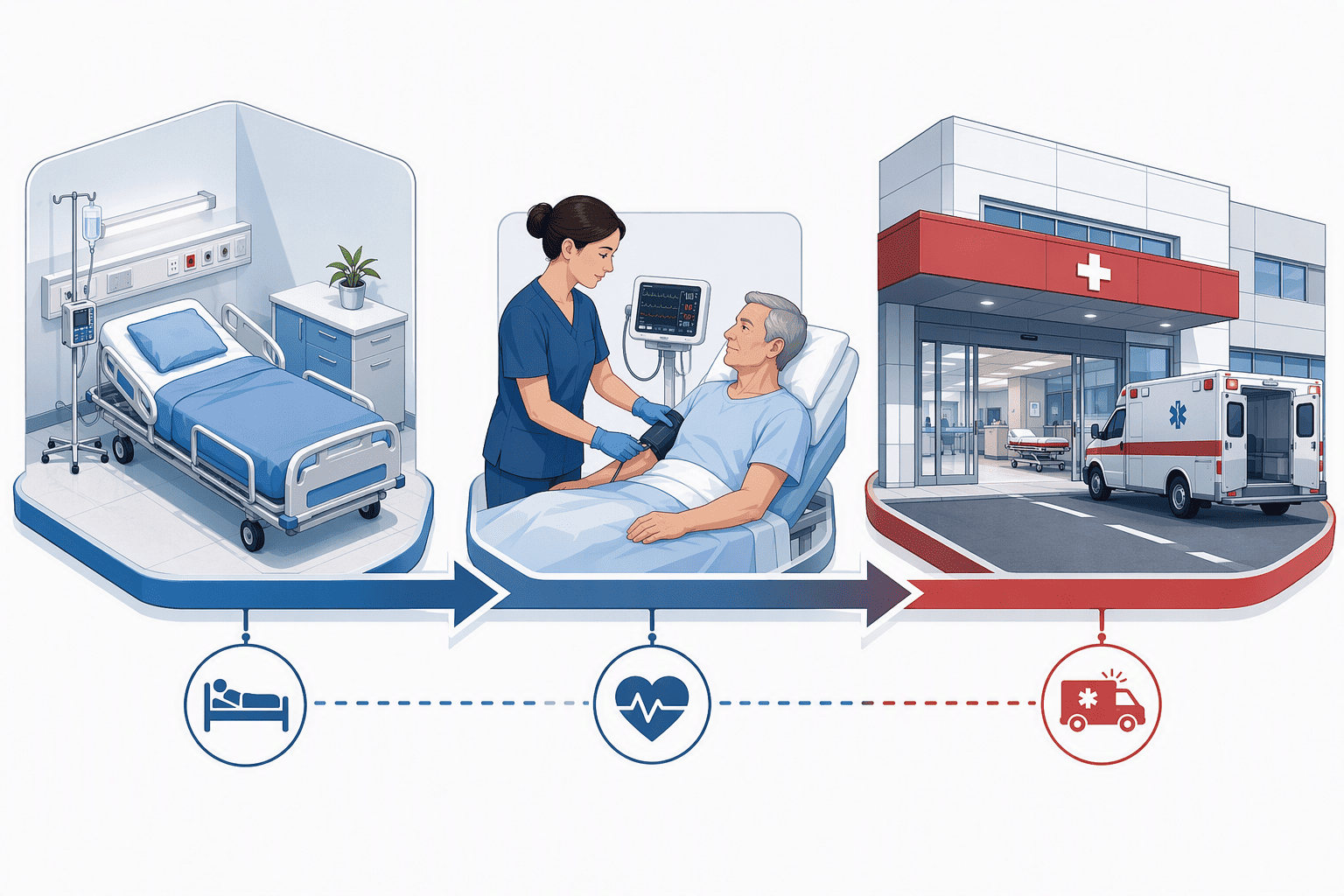
Skipping the mental run-through of a complication is the most dangerous move a medical tourist can make. You aren’t being morbid when you trace the route from your recovery bed to a hospital emergency department. You are checking whether the clinic has actually prepared for the worst, and that question needs an honest answer before sedation strips you of the ability to ask it. By 2014, roughly 65% of all surgical procedures were already happening on an outpatient basis, so protocols for managing a crisis outside a hospital are what your safety actually rests on.
Learn the concrete symptoms of a deep vein thrombosis: a calf that turns painful and swollen. For a pulmonary embolism, you are looking for sudden shortness of breath and chest pain. Demand that your surgeon give you their infection rate directly, and ask for the step-by-step protocol they would use to transfer a deteriorating patient to a facility like the University of Miami Health System.
The UHealth plastic surgery team holds board certification and handles complex reconstruction cases. That makes it a logical emergency backstop when a private-practice procedure goes wrong. After that planning, turn your travel timeline into a medical calculation.
For any thorough abdominal or facial surgery, book a minimum of two weeks on the ground before you fly. Cabin pressure changes and hours of sitting during the early post-inflammatory window raise your DVT risk sharply. If you notice redness creeping past the incision or a fever that ticks above 100.4°F, that return flight is medically unsafe.
Conclusion
Traveling for surgery pulls apart the usual safety layers that catch problems early, but that does not mean you lose control of the outcome. Independent ABPS and AAAASF verification, a recovery plan built into the process, and a signed continuity-of-care agreement give you a real safety mechanism. You cannot hand your trust to a social media feed or a price quote, but you can verify your way into an operating room where the surgical data matches the promise. Run the checklist, and let the objective confirmation of safety, not the emotional pull of a sales pitch, make the final call on your travel.
Frequently Asked Questions
What specific credentials and board certifications should I verify for a plastic surgeon in Miami before traveling from out of state?
Verify active certification from the American Board of Plastic Surgery (ABPS) or the American Board of Facial Plastic and Reconstructive Surgery (ABFPRS) on their official online portals. A state medical license is not a substitute for these rigorous, peer-reviewed benchmarks of surgical excellence.
How can I independently check the safety record and accreditation of a Miami cosmetic surgery facility?
Use the AAAASF website’s “Find a Facility” search to confirm the surgical center holds a current and active accreditation. You must also verify the class rating, ensuring it is at least Class B or C if your procedure requires deep sedation or general anesthesia.
What logistical arrangements and recovery support are key when planning surgery far from home?
Book a recovery house or hotel within ten minutes of the clinic, pre-schedule a dedicated aftercare nurse, and secure a written commitment for 24/7 direct-line access to a medical professional. Isolation in a remote hotel is the highest-risk variable for a traveling patient.
What are the cost ranges and potential hidden fees for procedures like male enhancement or liposuction in Miami?
Male enhancement can generally range from about $1,000 to $25,000 depending on complexity, but this often excludes anesthesia, OR time, and post-op garments. Always demand an itemized invoice separating the surgeon’s fee from facility costs, implant charges, and recovery supplies.
What are the specific risks and travel timelines for flying home after cosmetic surgery?
Plan for a minimum two-week post-operative stay in Miami before flying to reduce the risk of a deep vein thrombosis (DVT). Primary risks include infection and seroma formation; you must delay your return flight indefinitely if you develop a spreading redness or a fever above 100.4°F.
How should I prepare for a virtual consultation to verify a clinic’s technology and experience claims?
Request a live video walkthrough of the accredited operating room to see the equipment in real time. Ask for the specific model of surgical cannulas or fat-grafting systems used and demand data on the surgeon’s personal complication rate and annual volume for your exact procedure.
Sources
- American Association for Accreditation of Ambulatory Surgical Facilities (AAAASF) History: Its Role in Plastic Surgery Safety – PMC – pmc.ncbi.nlm.nih.gov
- Plastic Surgery | University of Miami Health System – uhealthsystem.miami.edu
- Patient FAQs – American Board of Facial Plastic and Reconstructive Surgery – www.abfprs.org
- George Pope, MD | Board-Certified Plastic Surgeon Orlando, FL – knightdermatology.com